Garage Door Emergency Release Safety Requirements and Compliance

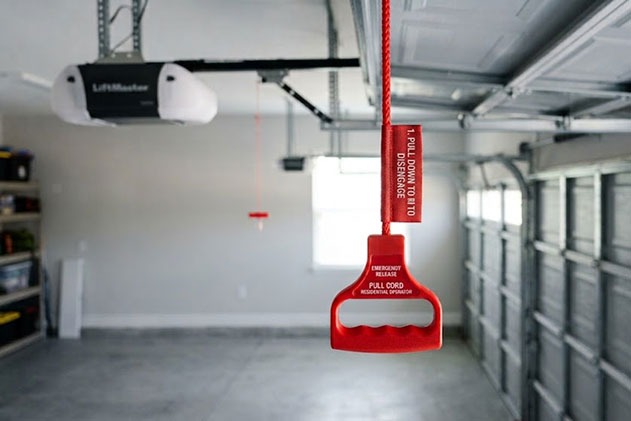
Red emergency release cord hanging from a LiftMaster garage door opener inside a residential garage

A garage door emergency release is a small part that matters a lot. It lets you disconnect the door from its opener so you can move it by hand during a power outage or opener failure. Knowing how it works and when to use it can help protect your family, vehicles, and property.

Many homeowners never think about this feature until the door gets stuck. But pulling the release at the wrong time can cause the door to fall, especially if its springs are damaged. Here’s what you should know about safety requirements, compliance, and everyday care.

What Is a Garage Door Emergency Release?

The emergency release is usually a red handle attached to a cord hanging from the opener’s trolley along the rail. Pulling the handle disengages the trolley from the opener’s drive system, allowing you to operate the door by hand.

This feature is useful during power outages and certain opener failures. However, disconnecting the opener does not fix mechanical problems or make an unbalanced door safe to lift. Always check the owner’s manual before using the release, especially if you have never operated it manually.

Garage Door Emergency Release Safety Requirements

In the United States, automatic residential garage door operators must comply with the federal safety standard in 16 CFR Part 1211. This standard incorporates entrapment protection provisions based on UL 325, which addresses hazards associated with powered door and gate operators. The U.S. Consumer Product Safety Commission (CPSC) explains the federal requirements.

The Door & Access Systems Manufacturers Association (DASMA) also provides a garage door safety checklist. It states that the manual release handle should be red, easy to distinguish from other operator parts, accessible, and no more than six feet above the garage floor while clearing vehicles.

Follow your opener manufacturer’s instructions and check local requirements before making changes. Do not remove or disable the manual release, photoelectric sensors, or other safety devices.

How to Use the Emergency Release Safely

Using the release without checking the door’s condition can create a serious safety risk. Follow these precautions:

  1. Close the door first, if possible. An open door may fall if its springs are weak or broken.
  2. Clear the doorway. Keep children, pets, and vehicles away from the door’s path.
  3. Disengage the trolley correctly. Follow the manufacturer’s instructions for pulling the release handle. The exact method can vary by opener model.
  4. Move the door slowly. Only lift or lower it if it feels balanced and moves without unusual force.
  5. Stop if something feels wrong. A heavy, crooked, or dropping door may have a spring, cable, or track problem. Do not force it.

To reconnect the opener, follow the instructions for your specific model. Make sure the door operates correctly and the trolley engages as intended before returning to normal use.

Compliance Tips for Homeowners and Property Managers

A garage door system needs regular checks, not just a one-time inspection. Keep these items on your maintenance list:

  • Inspect the release cord and handle for fraying, damage, or loose connections.
  • Keep the handle visible and accessible, with no stored items blocking it.
  • Check the manual release according to the opener manufacturer’s instructions.
  • Test the photoelectric sensors and automatic reversing feature as directed in the owner’s manual.
  • Keep records of inspections and repairs for rental or commercial properties.

Property managers and business owners may have additional obligations under local building codes, fire codes, or insurance requirements. Ask a qualified technician or local code official which rules apply to your building and door system.

Common Problems With Emergency Releases

A release cord can fray, break, or detach from its handle. The trolley mechanism can also wear out, making it difficult to disconnect the door. If the handle is missing or the release does not work as described in the manual, have the mechanism inspected before relying on it in an emergency.

There is also a security concern. On some doors, an outside gap may allow someone to reach the release handle with a tool. Ask a garage door professional about a manufacturer-approved shield or other suitable safeguard. Never disable the release as a security measure.

When Should You Call a Garage Door Professional?

Some garage door problems are not safe for DIY repairs. If the door drops after you disengage the opener, feels unusually heavy, hangs unevenly, or has a broken spring or cable, keep clear and call a qualified technician. Garage door springs store significant force, and adjusting them without proper training and tools can cause serious injury.

A professional can inspect the door, opener, springs, cables, and release mechanism. The technician can also check the safety features and identify worn parts that need repair.

For more information about garage doors, visit The Door Company.

Keep Your Garage Door Safe and Compliant

A properly working garage door emergency release can help you operate your door manually when the opener fails, but it must be used with care. Follow your opener manufacturer’s instructions, check the door for signs of damage, and call a qualified professional if it feels heavy or moves unevenly.

If you’re exploring garage door options for your property, visit The Door Company’s Garage Doors page to learn more about its available products.
Sliding Driveway Gate Materials: Steel vs. Aluminum Comparison

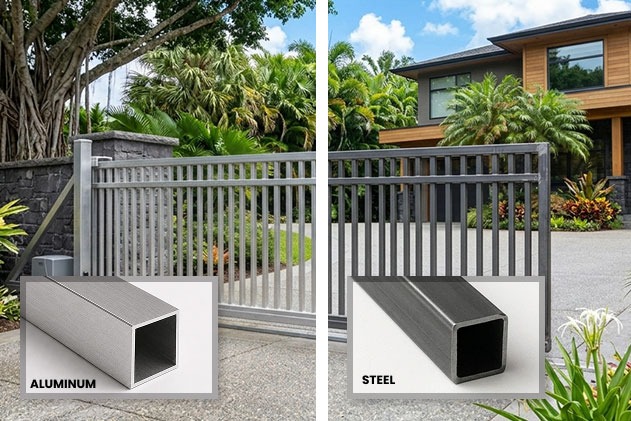
Aluminum and steel driveway gates shown side by side for material comparison

Choosing the right sliding driveway gate materials affects more than the look of your entrance. The material you select influences gate weight, maintenance needs, corrosion resistance, and how the system works with its hardware. Steel and aluminum are both widely used for sliding gates, but each suits different property conditions. Understanding how they compare can help you choose a gate built for your driveway and long-term maintenance needs.

Steel Sliding Driveway Gates: Strength With More Weight

Steel is often selected for gates that need a substantial, rigid feel. A well-built steel gate can handle demanding use, making it a practical option for larger driveways, commercial properties, and entrances with frequent vehicle traffic. Steel can also be painted or finished in a wide range of colors and styles to match a property’s aesthetic.

The main consideration with steel is corrosion protection. It can corrode when moisture and oxygen reach unprotected metal, so the coating system matters as much as the metal itself. Galvanized steel uses a zinc coating for corrosion resistance, while paint and other protective finishes can provide an additional layer of protection. The American Iron and Steel Institute identifies galvanizing as a standard method for protecting steel structures from corrosion.

That added weight isn’t a downside on its own, but it does mean the full system, including rollers, support posts, track, and operator, needs to be sized around the gate rather than treated as an afterthought.

Aluminum Sliding Driveway Gates: Lighter and Corrosion Resistant

Aluminum is known for its low weight and natural corrosion resistance, making it a common choice for both residential and commercial sliding gates. The Aluminum Association notes that aluminum used in building and construction offers durability, a high strength-to-weight ratio, and strong resistance to corrosion.

Because aluminum gates are lighter than comparable steel designs, they place less load on moving components and can simplify operator sizing. Alloy grade, frame design, and panel construction still affect the finished gate’s strength and appearance, and aluminum can be painted or finished to match a property’s style just as steel can.

One detail worth planning for is galvanic corrosion. Aluminum can corrode when it comes into contact with certain dissimilar metals in wet conditions, so compatible hardware and proper separation or protective coatings are important.

Steel vs. Aluminum: What Should You Consider?

Rather than looking for a universal winner, it helps to consider how each material matches your specific property and use case.

Weight and Hardware

Steel creates a heavier gate assembly, while aluminum offers a lighter alternative. Gate weight affects how rollers, support posts, and the operator are sized, so this should be settled early in the design process.

Weather and Corrosion

Aluminum has strong natural corrosion resistance, while steel depends more heavily on its protective coating holding up over time. Properties exposed to coastal air, heavy rain, or frequent moisture should weigh corrosion protection carefully in the material decision.

Appearance and Maintenance

Both materials support painted or custom finishes. Steel needs closer attention to scratches or coating damage that could expose bare metal to the elements. Aluminum generally raises fewer rust concerns, though its finish and hardware still need routine care.

Gate Layout and Operation

Material is only one part of the decision. Side clearance, driveway grade, gate size, traffic volume, and automation plans all shape the final specification.

Choose Sliding Driveway Gate Materials Based on the Site

Steel and aluminum can both work well for sliding driveway gates, but the right choice depends on the complete installation, not the material alone. Steel tends to suit projects where heavier construction and a rigid structure are priorities. Aluminum tends to fit sites where lower weight and corrosion resistance matter more. Your driveway layout, local climate, and access requirements should guide the final decision.

Before ordering a gate, have the site evaluated for clearance, support requirements, track or cantilever configuration, operator sizing, and overall gate requirements. The Door Company offers sliding gate options designed around different driveway layouts, property needs, and operating requirements.

Still weighing steel against aluminum for your driveway? Contact The Door Company for a site evaluation and personalized recommendation based on your property’s needs.

Folding Garage Gate Benefits for Industrial and Warehouse Facilities

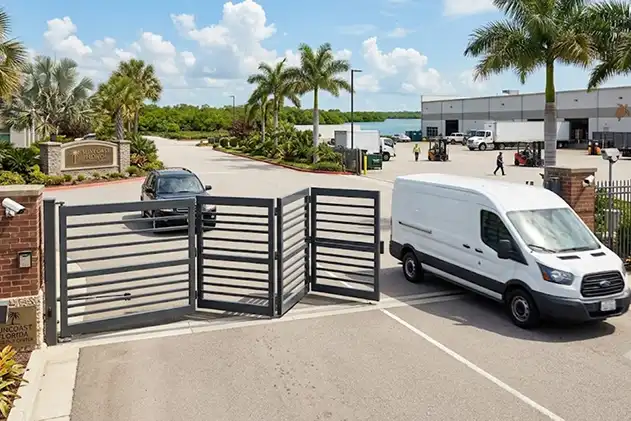
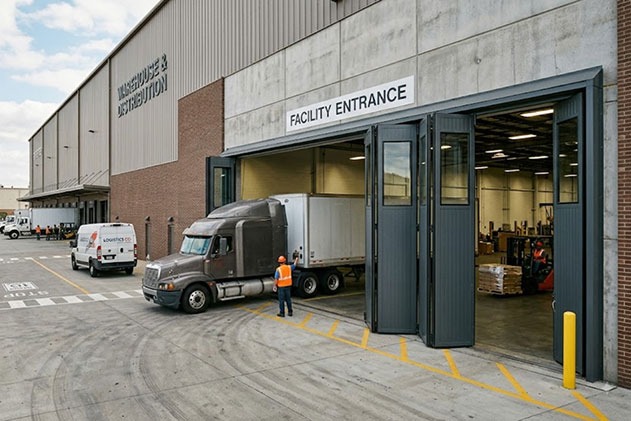
Folding garage gate at a warehouse facility with a delivery truck entering

A bottleneck at your warehouse entrance doesn’t just cause traffic—it costs you money and kills productivity. When trucks, employees, contractors, and deliveries share the exact same access point, you need a system that keeps everything moving. A folding garage gate delivers high-speed, controlled access while maximizing every inch of limited space around your entrance. 

Unlike traditional swing gates that require a wide opening path, folding gates use connected panels that fold as the gate opens. This design can be useful for warehouses, distribution centers, manufacturing facilities, and other properties where vehicle traffic is frequent and entrance space is limited.

What Sets a Folding Garage Gate Apart?

A folding garage gate, often called a bi-fold or four-fold driveway gate, operates using heavy-duty connected panels that fold inward together. Instead of swinging widely across a driveway or dragging along a lengthy fence line, the panels snap into a tight, compact position. 

This compact opening pattern can be useful for industrial facilities, logistics centers, and commercial warehouses where loading docks, parking areas, buildings, or property lines are close to the entrance. By requiring less operating space than some traditional gate designs, a folding gate can provide greater flexibility around a busy access point.

Built for High-Traffic Industrial Demands

Warehouse entrances can see steady vehicle activity throughout the day. Delivery trucks, employee vehicles, service vehicles, and contractors may all use the same access point. When traffic is frequent, the gate becomes part of the facility’s daily workflow.

A commercial folding gate can be a practical option for these conditions, particularly when the entrance has limited clearance. The system still needs to be selected according to the site’s traffic volume, driveway width, vehicle types, and operating requirements.

A trackless design can also reduce the ground-level debris issues associated with some sliding gate systems, where dirt, gravel, snow, or other debris may interfere with operation.

Security That Supports Daily Operations

Security is another important consideration for industrial and warehouse facilities. A folding gate can be paired with access control equipment to help manage who enters the property without creating unnecessary obstacles for authorized vehicles. 

Folding gates seamlessly integrate with access control equipment based on the needs of the facility. Common options may include:

  • Keypad entry
  • Card readers
  • Remote controls
  • Telephone entry systems
  • License plate recognition

When properly configured, these systems can help facility managers control site entry while supporting an organized flow of authorized traffic.

Ideal Applications for Folding Gates 

Four-fold gates can be a practical option for facilities with frequent vehicle movement or limited entrance space. Common applications include: 

  • Distribution and logistics centers
  • Manufacturing facilities
  • Warehouses
  • Fleet service yards
  • Commercial properties
  • Apartment and condominium communities
  • Government facilities
  • Schools and universities

The defining factor is your entrance. If your property battles constant vehicle movement, suffers from restricted clearance, or demands high-speed controlled access, upgrading to a folding gate provides a massive operational advantage.

Why Professional Installation Matters

A commercial gate needs to be properly matched to the property before installation. Factors such as gate width, foundation conditions, operator selection, available clearance, traffic patterns, and safety equipment can all affect the installation.

A professional site evaluation can help identify these requirements before work begins and determine whether a folding gate is appropriate for the property.

Industry organizations such as the Door and Access Systems Manufacturers Association (DASMA) provide safety guidance for automated vehicular gate systems, including proper installation and safe operation.

Safety planning is also important around busy industrial entrances. OSHA recommends separating pedestrian and powered industrial truck traffic where possible and keeping travel paths clear of hazards.

Choose the Right Gate for Your Facility

A warehouse gate does more than secure the property. It becomes part of the facility’s daily traffic flow, so its design needs to fit the available space, vehicle movement, and access requirements.

A folding garage gate can be a practical alternative to swing or sliding gates when limited space and frequent vehicle traffic are key concerns. The right choice will depend on the specific layout, traffic patterns, and operating needs of the property.

If you are planning a new installation or finally replacing an aging, failing gate, The Door Company will evaluate your facility’s traffic patterns, available space, and access requirements to deploy the exact commercial gate system your site demands.


Four Fold Driveway Gate Performance: Why High-Traffic Facilities Choose Them

Four-fold driveway gate at a commercial property entrance with vehicles entering and exiting

When a distribution center, manufacturing plant, apartment community, or municipal facility experiences constant vehicle traffic, the entrance gate becomes more than a security feature. It becomes part of the daily operation. A Four Fold Driveway Gate helps keep vehicles moving while maintaining controlled access, reducing delays during deliveries, shift changes, and busy operating hours.

Traditional swing and sliding gates work well for many properties, but they aren’t always the best fit for facilities with limited space and continuous traffic. Four-fold gates are designed to open quickly while requiring less clearance, making them a practical solution for businesses that can’t afford bottlenecks at the entrance.

What Makes a Four Fold Driveway Gate Different?

A Four Fold Driveway Gate, sometimes called a folding driveway gate or bi-fold driveway gate, uses connected panels that fold inward as the gate opens. Instead of swinging across a large area or sliding along a fence line, the panels fold neatly together, allowing the entrance to clear much faster.

This compact design is especially useful where available space is limited or vehicle traffic is frequent. Warehouses, logistics centers, industrial facilities, apartment communities, schools, and municipal buildings often choose four-fold gates because they provide efficient access without requiring the large operating space needed by traditional gate systems.

Built for High-Traffic Facilities

Commercial entrances often cycle dozens or even hundreds of times each day. Every delay can affect deliveries, employee access, and overall site efficiency.

Many commercial-grade four-fold gate systems are engineered for high-cycle operation, using heavy-duty hinges, reinforced frames, and reliable automation designed for demanding environments. Their trackless design also eliminates one of the common maintenance issues associated with sliding gates, where dirt, gravel, or debris can interfere with operation.

Routine inspections and preventive maintenance help keep the system operating reliably for years.

Security That Doesn’t Slow Down Operations

Older gate designs often require businesses to choose between security and convenience. A gate that opens slowly can create unnecessary traffic backups, while one that isn’t properly integrated with access controls may introduce security risks.

A Four Fold Driveway Gate helps balance both priorities. Fast opening speeds reduce vehicle wait times, while the folding design minimizes the amount of space needed for operation.

These gates can also integrate with modern security systems, including:

  • Keypad entry
  • Card readers
  • RFID credentials
  • Telephone entry systems
  • Remote controls
  • License plate recognition

When paired with a commercial access control system, businesses can maintain efficient traffic flow while restricting entry to authorized personnel.

Where Four Fold Gates Deliver the Most Value

While every commercial property has unique requirements, four-fold driveway gates are particularly effective for facilities that experience frequent vehicle movement or have limited entrance space.

They are commonly installed at:

  • Distribution and logistics centers
  • Manufacturing facilities
  • Fleet service yards
  • Apartment and condominium communities
  • Government facilities
  • Schools and universities
  • Utility companies
  • Commercial parking areas

A professional site evaluation helps determine the right gate size, operator, safety features, and access control system based on traffic patterns and property layout.

Why Professional Installation Matters

Even a high-quality gate system depends on proper installation. Factors such as gate width, foundation design, wind loads, operator selection, and safety devices all influence long-term performance.

Industry organizations like the Door and Access Systems Manufacturers Association (DASMA) recommend proper installation and regular maintenance to support safe, dependable operation of automated gate systems.

Likewise, OSHA emphasizes maintaining safe vehicle and pedestrian access around industrial entrances, making properly functioning gate systems an important part of overall workplace safety.

Keep Traffic Moving With the Right Gate System

High-traffic facilities need an entrance system that works as reliably as the business behind it. A Four Fold Driveway Gate offers fast operation, efficient use of space, dependable security, and compatibility with modern access control technology, making it an excellent choice for commercial and industrial properties.

Whether you’re planning a new installation or replacing an aging gate system, The Door Company can recommend a solution designed around your facility’s traffic patterns, operational needs, and security requirements.

Four-Fold Gates Residential Design Options for Modern Homes

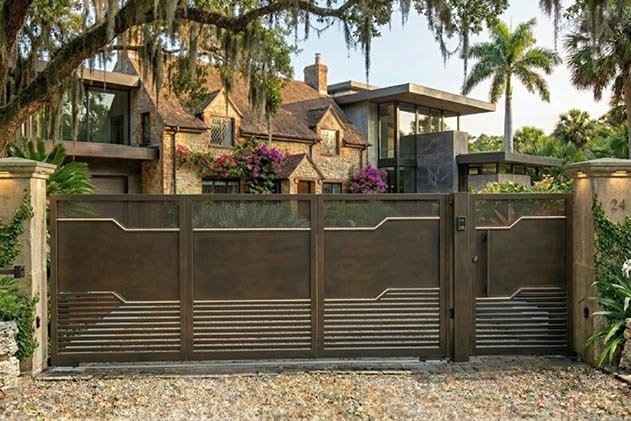
Residential four-fold sliding gate design with contemporary architecture

When upgrading a property, installing four-fold gates for homes is the perfect solution for homeowners dealing with limited driveway space. Traditional swing gates need plenty of room to open, while sliding systems require extra space along the fence line. For properties with shorter driveways or tighter layouts, finding the right gate system can become challenging. 

That is where four-fold gates for homes become a practical option. These systems fold inward in sections, taking up far less space than traditional gate designs. Along with improved functionality, they also add a clean architectural look that works especially well with contemporary residential properties.

Homeowners often choose folding gate systems because they balance appearance, convenience, and day-to-day functionality.

How Do Four-Fold Gates Work?

Most four-fold gate systems use connected panels on each side of the driveway. When the gate opens, the panels fold back onto themselves instead of swinging outward or sliding across a long track.

Because of this compact movement, folding gates work well for:

  • Short driveways
  • Urban homes with limited frontage
  • Sloped entrances
  • Properties with limited side clearance
  • Homes using automatic gate systems

Homeowners can choose between track-based systems and trackless models. Trackless folding gates are supported by heavy-duty posts instead of ground tracks, which helps avoid issues caused by leaves, gravel, snow, or debris buildup.

This makes them a practical choice for homeowners looking for low-maintenance access control.

Why Homeowners Choose Four-Fold Gates

Many property owners choose folding systems because they solve common driveway access problems while improving security and daily convenience.

Some of the biggest advantages include:

  • Saving space on smaller driveways
  • Faster opening and closing times
  • Smooth operation with automated systems
  • Reduced need for fence-line clearance
  • Compatibility with modern residential architecture

According to experts at This Old House, driveway gates can significantly improve both property appearance and overall functionality when designed correctly.

Four-fold systems are also well suited for homeowners who want a more streamlined entrance without the bulkier appearance of traditional gate layouts.

Popular Residential Gate Design Styles

One reason folding gates work well in modern homes is the flexibility in design. Homeowners can choose materials, finishes, and layouts that match the overall appearance of the property.

Custom Metal Gates 

Custom metal gates remain one of the most popular options for contemporary homes. Aluminum and steel are both widely used because they combine durability with a clean appearance.

Aluminum is lightweight and naturally resistant to rust, making it a smart low-maintenance option. Steel offers a heavier and more secure feel for larger residential entrances.

Many homeowners choose powder-coated finishes in black, charcoal, bronze, or matte white to complement modern exterior colors.

You can explore four-fold gates and additional driveway installation services from The Door Co. to see different residential gate styles and configurations.

Wood and Metal Combination Gates 

For homeowners who want a softer and warmer appearance, combining wood with metal framing is another popular choice.

Horizontal wood slats paired with black aluminum or steel frames create a balanced look that fits many modern architectural styles. These combinations work especially well for:

  • Modern farmhouse homes
  • Mid-century residential designs
  • Contemporary custom homes

The combination of natural textures and clean metal framing gives the entrance a more custom appearance without looking overly decorative.

Automated Folding Gates for Daily Convenience

Convenience has become a major factor in residential gate design. Many homeowners now prefer automated folding gates that can be operated through remotes, keypads, smartphone apps, or vehicle sensors.

Because folding systems use smaller connected panels, they often open faster than traditional swing gates. The compact movement also reduces wind resistance during operation.

Automated systems can integrate with:

  • Security cameras
  • Video intercom systems
  • Smart home controls
  • Remote access systems

Professional installation also helps make sure the system operates safely and reliably over time.

The American Fence Association provides general information about gate safety and professional installation standards.

How to Choose the Right Folding Gate System

Choosing the right gate usually comes down to a few practical questions:

  • Is your driveway too short for a swing gate?
  • Does your driveway slope upward?
  • Do you want faster gate operation?
  • Are you planning to automate the system?
  • How important is low maintenance?

Answering these questions helps narrow down the best option for your property layout and daily usage needs.

Making the Right Choice for Your Driveway 

Four-fold gates for homes offer a smart combination of security, convenience, and modern residential design. They work especially well for properties where space is limited but appearance still matters.

Whether you prefer custom metal gates, wood-and-metal combinations, or fully automated systems, the right folding gate can improve both functionality and curb appeal for years to come.

The Door Co. provides professional driveway gate installation, automation, repair, and maintenance services throughout Northern California. Homeowners across Chico, Yuba City, Redding, and Stockton continue to rely on their team for dependable residential gate solutions.