


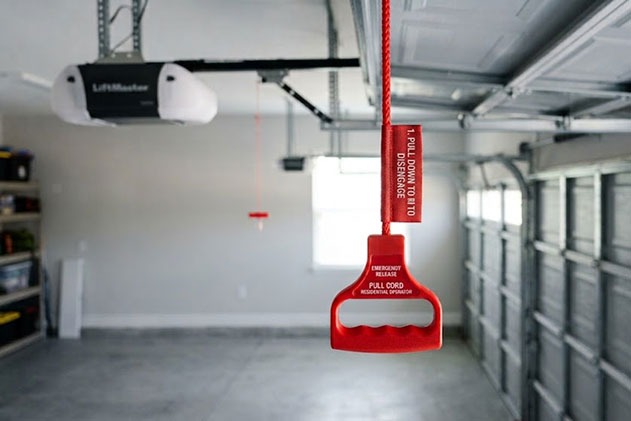
A garage door emergency release is a small part that matters a lot. It lets you disconnect the door from its opener so you can move it by hand during a power outage or opener failure. Knowing how it works and when to use it can help protect your family, vehicles, and property.
Many homeowners never think about this feature until the door gets stuck. But pulling the release at the wrong time can cause the door to fall, especially if its springs are damaged. Here’s what you should know about safety requirements, compliance, and everyday care.
What Is a Garage Door Emergency Release?
The emergency release is usually a red handle attached to a cord hanging from the opener’s trolley along the rail. Pulling the handle disengages the trolley from the opener’s drive system, allowing you to operate the door by hand.
This feature is useful during power outages and certain opener failures. However, disconnecting the opener does not fix mechanical problems or make an unbalanced door safe to lift. Always check the owner’s manual before using the release, especially if you have never operated it manually.
Garage Door Emergency Release Safety Requirements
In the United States, automatic residential garage door operators must comply with the federal safety standard in 16 CFR Part 1211. This standard incorporates entrapment protection provisions based on UL 325, which addresses hazards associated with powered door and gate operators. The U.S. Consumer Product Safety Commission (CPSC) explains the federal requirements.
The Door & Access Systems Manufacturers Association (DASMA) also provides a garage door safety checklist. It states that the manual release handle should be red, easy to distinguish from other operator parts, accessible, and no more than six feet above the garage floor while clearing vehicles.
Follow your opener manufacturer’s instructions and check local requirements before making changes. Do not remove or disable the manual release, photoelectric sensors, or other safety devices.
How to Use the Emergency Release Safely
Using the release without checking the door’s condition can create a serious safety risk. Follow these precautions:
- Close the door first, if possible. An open door may fall if its springs are weak or broken.
- Clear the doorway. Keep children, pets, and vehicles away from the door’s path.
- Disengage the trolley correctly. Follow the manufacturer’s instructions for pulling the release handle. The exact method can vary by opener model.
- Move the door slowly. Only lift or lower it if it feels balanced and moves without unusual force.
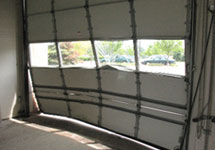
- Stop if something feels wrong. A heavy, crooked, or dropping door may have a spring, cable, or track problem. Do not force it.
To reconnect the opener, follow the instructions for your specific model. Make sure the door operates correctly and the trolley engages as intended before returning to normal use.
Compliance Tips for Homeowners and Property Managers
A garage door system needs regular checks, not just a one-time inspection. Keep these items on your maintenance list:
- Inspect the release cord and handle for fraying, damage, or loose connections.
- Keep the handle visible and accessible, with no stored items blocking it.
- Check the manual release according to the opener manufacturer’s instructions.
- Test the photoelectric sensors and automatic reversing feature as directed in the owner’s manual.
- Keep records of inspections and repairs for rental or commercial properties.
Property managers and business owners may have additional obligations under local building codes, fire codes, or insurance requirements. Ask a qualified technician or local code official which rules apply to your building and door system.
Common Problems With Emergency Releases
A release cord can fray, break, or detach from its handle. The trolley mechanism can also wear out, making it difficult to disconnect the door. If the handle is missing or the release does not work as described in the manual, have the mechanism inspected before relying on it in an emergency.
There is also a security concern. On some doors, an outside gap may allow someone to reach the release handle with a tool. Ask a garage door professional about a manufacturer-approved shield or other suitable safeguard. Never disable the release as a security measure.
When Should You Call a Garage Door Professional?
Some garage door problems are not safe for DIY repairs. If the door drops after you disengage the opener, feels unusually heavy, hangs unevenly, or has a broken spring or cable, keep clear and call a qualified technician. Garage door springs store significant force, and adjusting them without proper training and tools can cause serious injury.
A professional can inspect the door, opener, springs, cables, and release mechanism. The technician can also check the safety features and identify worn parts that need repair.
For more information about garage doors, visit The Door Company.
Keep Your Garage Door Safe and Compliant
A properly working garage door emergency release can help you operate your door manually when the opener fails, but it must be used with care. Follow your opener manufacturer’s instructions, check the door for signs of damage, and call a qualified professional if it feels heavy or moves unevenly.
If you’re exploring garage door options for your property, visit The Door Company’s Garage Doors page to learn more about its available products.