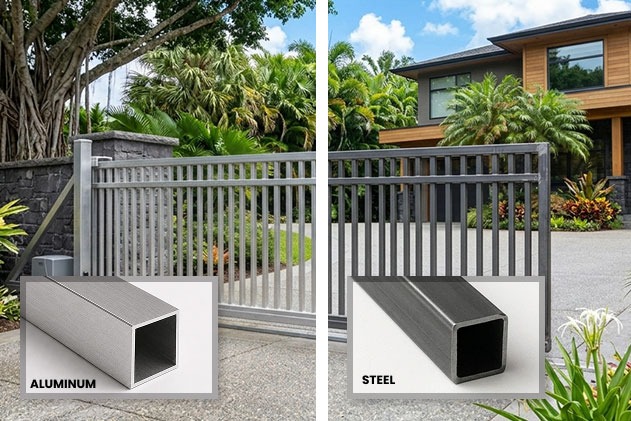
Choosing the right sliding driveway gate materials affects more than the look of your entrance. The material you select influences gate weight, maintenance needs, corrosion resistance, and how the system works with its hardware. Steel and aluminum are both widely used for sliding gates, but each suits different property conditions. Understanding how they compare can help you choose a gate built for your driveway and long-term maintenance needs.
Steel Sliding Driveway Gates: Strength With More Weight
Steel is often selected for gates that need a substantial, rigid feel. A well-built steel gate can handle demanding use, making it a practical option for larger driveways, commercial properties, and entrances with frequent vehicle traffic. Steel can also be painted or finished in a wide range of colors and styles to match a property’s aesthetic.
The main consideration with steel is corrosion protection. It can corrode when moisture and oxygen reach unprotected metal, so the coating system matters as much as the metal itself. Galvanized steel uses a zinc coating for corrosion resistance, while paint and other protective finishes can provide an additional layer of protection. The American Iron and Steel Institute identifies galvanizing as a standard method for protecting steel structures from corrosion.
That added weight isn’t a downside on its own, but it does mean the full system, including rollers, support posts, track, and operator, needs to be sized around the gate rather than treated as an afterthought.
Aluminum Sliding Driveway Gates: Lighter and Corrosion Resistant
Aluminum is known for its low weight and natural corrosion resistance, making it a common choice for both residential and commercial sliding gates. The Aluminum Association notes that aluminum used in building and construction offers durability, a high strength-to-weight ratio, and strong resistance to corrosion.
Because aluminum gates are lighter than comparable steel designs, they place less load on moving components and can simplify operator sizing. Alloy grade, frame design, and panel construction still affect the finished gate’s strength and appearance, and aluminum can be painted or finished to match a property’s style just as steel can.
One detail worth planning for is galvanic corrosion. Aluminum can corrode when it comes into contact with certain dissimilar metals in wet conditions, so compatible hardware and proper separation or protective coatings are important.
Steel vs. Aluminum: What Should You Consider?
Rather than looking for a universal winner, it helps to consider how each material matches your specific property and use case.
Weight and Hardware
Steel creates a heavier gate assembly, while aluminum offers a lighter alternative. Gate weight affects how rollers, support posts, and the operator are sized, so this should be settled early in the design process.
Weather and Corrosion
Aluminum has strong natural corrosion resistance, while steel depends more heavily on its protective coating holding up over time. Properties exposed to coastal air, heavy rain, or frequent moisture should weigh corrosion protection carefully in the material decision.
Appearance and Maintenance
Both materials support painted or custom finishes. Steel needs closer attention to scratches or coating damage that could expose bare metal to the elements. Aluminum generally raises fewer rust concerns, though its finish and hardware still need routine care.
Gate Layout and Operation
Material is only one part of the decision. Side clearance, driveway grade, gate size, traffic volume, and automation plans all shape the final specification.
Choose Sliding Driveway Gate Materials Based on the Site
Steel and aluminum can both work well for sliding driveway gates, but the right choice depends on the complete installation, not the material alone. Steel tends to suit projects where heavier construction and a rigid structure are priorities. Aluminum tends to fit sites where lower weight and corrosion resistance matter more. Your driveway layout, local climate, and access requirements should guide the final decision.
Before ordering a gate, have the site evaluated for clearance, support requirements, track or cantilever configuration, operator sizing, and overall gate requirements. The Door Company offers sliding gate options designed around different driveway layouts, property needs, and operating requirements.
Still weighing steel against aluminum for your driveway? Contact The Door Company for a site evaluation and personalized recommendation based on your property’s needs.